Our Guarantee
At Cow Cuties, your new mini cow’s health and safety are our top priority. Every calf receives a full veterinary examination before going home, and you’ll receive an official health certificate for total confidence in your purchase.
We recommend taking your new calf to your own veterinarian within four days of arrival to ensure a smooth transition and to give you added reassurance.
Simple, Fair, and Transparent Guarantee
If for any reason your calf isn’t the perfect fit, you may return it within four days for a full refund, minus a small $20 handling fee.
No complications. No hidden terms. Just honesty.
1-Year Genetic & Hereditary Protection
Should your calf develop a severe hereditary or genetic condition within the first year that requires euthanasia, we will replace your calf with one from the next available litter—because we stand behind the quality of every mini cow we raise.
We’re Here for You, Always
When you buy from Cow Cuties, you’re not just getting a mini cow — you’re getting a partner. We’re always available to answer questions, guide new owners, and help you care for your new companion with confidence.
Your calf’s well-being matters to us just as much as it matters to you.
How to Care for Your Mini Cow — Simple Tips to Keep Your New Cutie Happy & Healthy
Bringing home a mini cow is an unforgettable experience — they’re gentle, loving, and full of personality. And while caring for a calf may seem overwhelming at first, the truth is: with the right guidance, it’s easier than most people think.
At Cow Cuties, we want every new owner to feel confident, prepared, and excited. That’s why we’ve put together a few essential tips to help you give your mini cow the best possible start.
Caring for Your Mini Cutie Is Easier Than You Think
With proper tools, routine, and support, raising your calf becomes a joyful and rewarding journey. Below are the key things every new owner should know to help their mini cow grow healthy, strong, and happy.
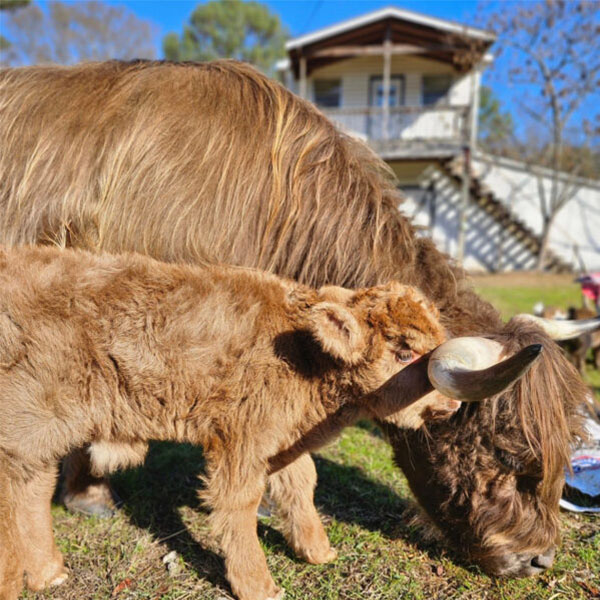
How to Care for Your Mini Cutie Cow
A Simple, Friendly Guide to Raising a Happy & Healthy Calf
Bringing home a mini Highland calf is a truly special experience. These gentle, fluffy companions are loving, intelligent, and quickly become a cherished part of the family. And although caring for a calf may feel intimidating at first, the truth is: with the right guidance, it’s easy, enjoyable, and incredibly rewarding.
Below is a simplified, owner-friendly guide to help you give your new Cutie the healthiest and happiest start possible.
1. Creating a Safe & Comfortable Environment
Shelter That Keeps Your Calf Cozy
Your calf needs a warm, dry shelter protected from wind, rain, and extreme temperatures. A barn, shed, or three-sided run-in with straw or wood-shaving bedding is perfect. Aim for:
Good ventilation
No harsh drafts
Dry, clean bedding
This gives your calf security and helps prevent illness.
Safe Space to Explore & Play
Mini Highlands are small, curious, and surprisingly agile. A secure pasture with proper fencing is essential.
Because young calves can roll under standard fencing, we recommend:
A 4th bottom rail about 6″ from the ground
A cattle panel added to the inside of the lower two rails
This prevents escapes and keeps your calf safely contained while giving them freedom to roam and enjoy their new home.
2. Feeding & Nutrition — Helping Your Calf Grow Strong
Colostrum: The First Essential Step
In the first hours of life, calves need colostrum loaded with natural antibodies. At Castle Farm, newborns stay with their mothers for at least two weeks so they receive everything they need for a strong immune foundation.
If bottle-feeding is desired, we then wean, begin bottle training, and introduce halter handling before they leave for your home.
Milk Feeding Made Simple
For the first several weeks, your calf relies primarily on milk. If bottle-feeding:
Use a high-quality calf milk replacer
Feed roughly 10–12% of body weight per day, divided into 2–4 feedings
By 4 weeks, two feedings per day is typically enough as your calf begins eating grain, hay, and grass.
Transitioning to Solid Food
At 3 weeks, start introducing:
Calf starter grain
High-quality hay
Fresh, clean water
Continue offering milk until your calf is 8–10 weeks old and confidently eating grass and grain.
Grass, Hay & Hydration
Mini Highlands thrive on:
High-quality hay
Fresh pasture grass (grass + clover is ideal)
Unlimited clean water
Bottle-fed calves socialize beautifully and develop a gentle, affectionate temperament — one reason many families love this option.
If you prefer natural weaning (about 4 months), we can accommodate that too.
3. Vaccinations: Protecting Your Calf’s Long-Term Health
Work with your local veterinarian to build the best vaccination schedule for your region. Below are general guidelines:
3–4 Months of Age
BRD Vaccines (Respiratory Protection):
IBR
BVD
PI3
BRSV
Clostridial (7-way or 8-way)
Protection against blackleg, enterotoxemia, and other serious diseases.
6–8 Months of Age
BRD Booster
12 Months & Annually (or 1–2 Months Before Breeding)
Leptospirosis
IBR
Annual BRD booster
Vibriosis (for breeding stock)
Footrot & Pinkeye vaccines (if common in your region)
Your vet or local extension office can tailor this precisely to your area.
4. Routine Health Care
Regular Vet Check-Ups
Consistent check-ups help your calf grow healthy and catch any potential issues early.
Deworming
Your veterinarian will recommend the best parasite-prevention schedule for your climate and pasture conditions.
Hoof Care
In many areas, hooves naturally wear down. If needed, occasional trimming by a farrier keeps your calf comfortable as they grow.
5. Socialization & Handling — Building the Sweet Temperaments We Love
Gentle Daily Interaction
Start handling your calf early. Calm, friendly interaction helps them:
Build trust
Feel secure
Become well-socialized
Your Castle Farm calf has already been:
Bottle-fed (if chosen)
Handled daily
Halter trained
Started on lead training
This makes the transition into your family smooth and stress-free.
Animal Companionship
Calves are herd animals. They thrive when they have a companion such as:
Another mini cow
A goat
A lamb
A pony
This keeps them emotionally healthy and reduces stress.
6. Monitoring Your Calf’s Daily Health
Simple Daily Check-In
Spend a few minutes each day during feeding to make sure your calf is:
Eating well
Active and curious
Playful
Alert
Watch for signs like coughing, lethargy, or refusal to eat, and call your vet if anything seems unusual.
Healthy Growth & Body Condition
Your vet can help determine the right balance of hay, grain, and pasture. Even with strong pasture, many owners offer a small amount of grain twice daily to:
Check hydration
Monitor condition
Strengthen the human–animal bond
Brushing also supports a healthy coat and helps you catch any skin issues early.
The Joy of Raising a Mini Highland Calf
Caring for a baby mini Highland is one of the most rewarding experiences you can imagine. With the right environment, great nutrition, proper health care, and lots of love, your calf will grow into a happy, healthy, gentle companion.
At Castle Farm Cattle Company, we’re with you every step of the way.
If you ever need guidance or support after your purchase, we’re always just a call or message away.
Email : Info@cowcuties.com
Address : 328 Beryl Rd S, Conway, AR &2032